
We started this session with the obligatory high key white setup. Unless I’m shooting fashion/editorial (or teaching), I rarely shoot with high key white for myself. Unfortunately in common usage, high key only appears to means the high key white style popularised by a major photography studio franchise.
There are two key points to shooting with a high key white background. One is not to over-light the background – one stop brighter than the subject should be sufficient – too much spill from the background lighting will kill any contrast in your subject and in the extreme you see the ghosting on the edges. The other important issue is that the background is evenly lit (fixing the background afterwards in post-processing is just not productive).
For this set the background was metered for f/8.


The shot on the left shows an early stage in the setup – there is no key light and Fredau is lit by the spill from the background lights (shot at f/5.6). The shot on the right is maybe a little bit dark (shot at f/8) but the spill has been eliminated and Fredau is lit with a single key light.
A little bit of post-processing of the second shot yields this:
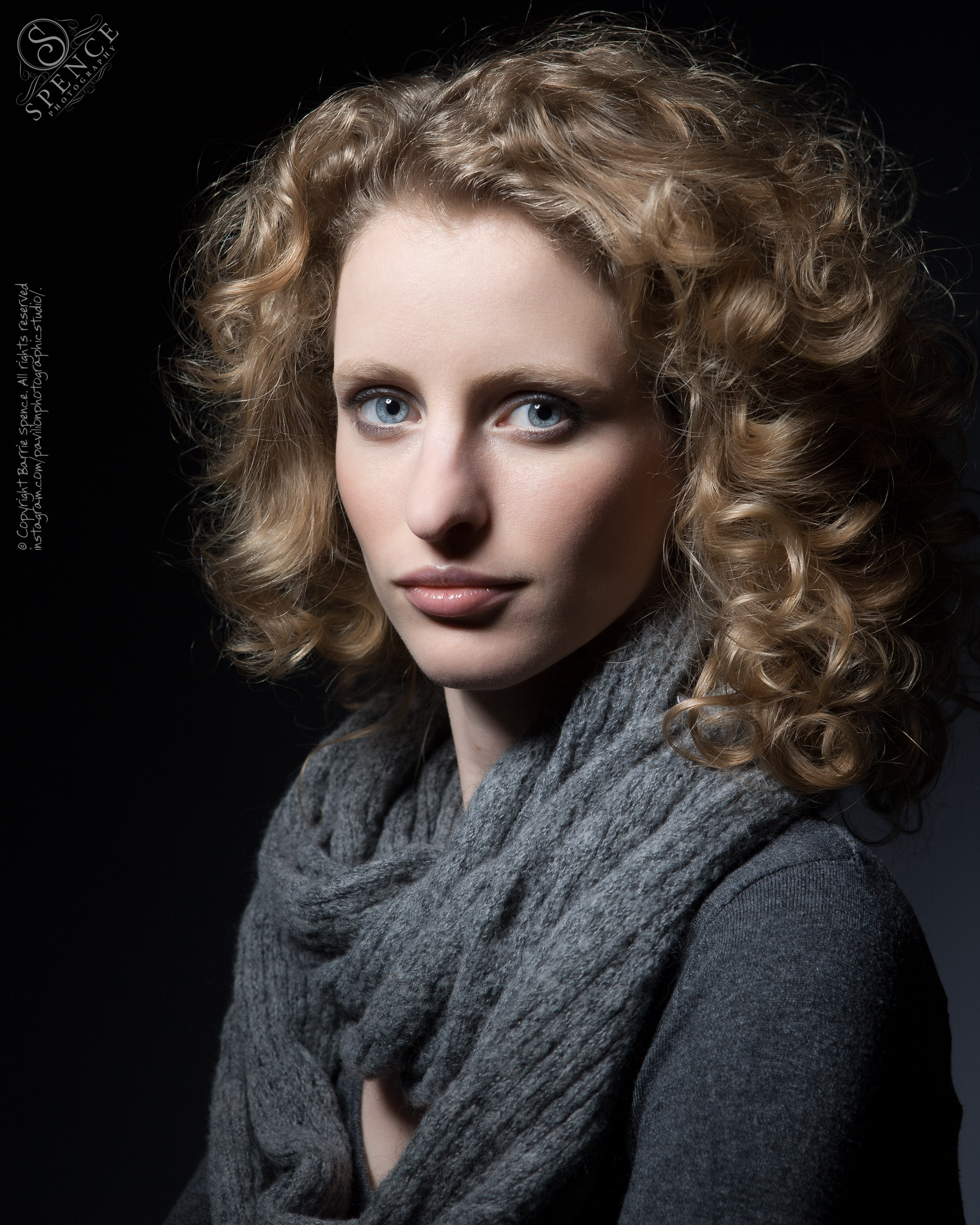
I must admit that I much prefer to shoot low key studio portraits. To save time (read as I’m lazy) we went on to shoot a low key set with the same white background. Shooting low key with a white background isn’t particularly difficult – it’s just a matter of understanding and controlling the light.
By turning the background lights off and moving Fredau and the key light away from the white background roll, we immediately cause the background to darken. Depending on the choice of modifier on the key light it might be necessary to use something to stop the light spill from the background – these were shot with the beauty dish.
The tones and textures of Fredau’s top were chosen with the intention of a final black and white image:

We finished with a clamshell setup. Clamshell lighting is generally the only two light setup that I use for portraits (I’ll use an extra light for an accent or to give separation, but the primary lighting is normally a single light).

We repeat this course a few times over the year. Check the course information page for future dates and sign up to the newsletter.